How to optimize content for AI search engines
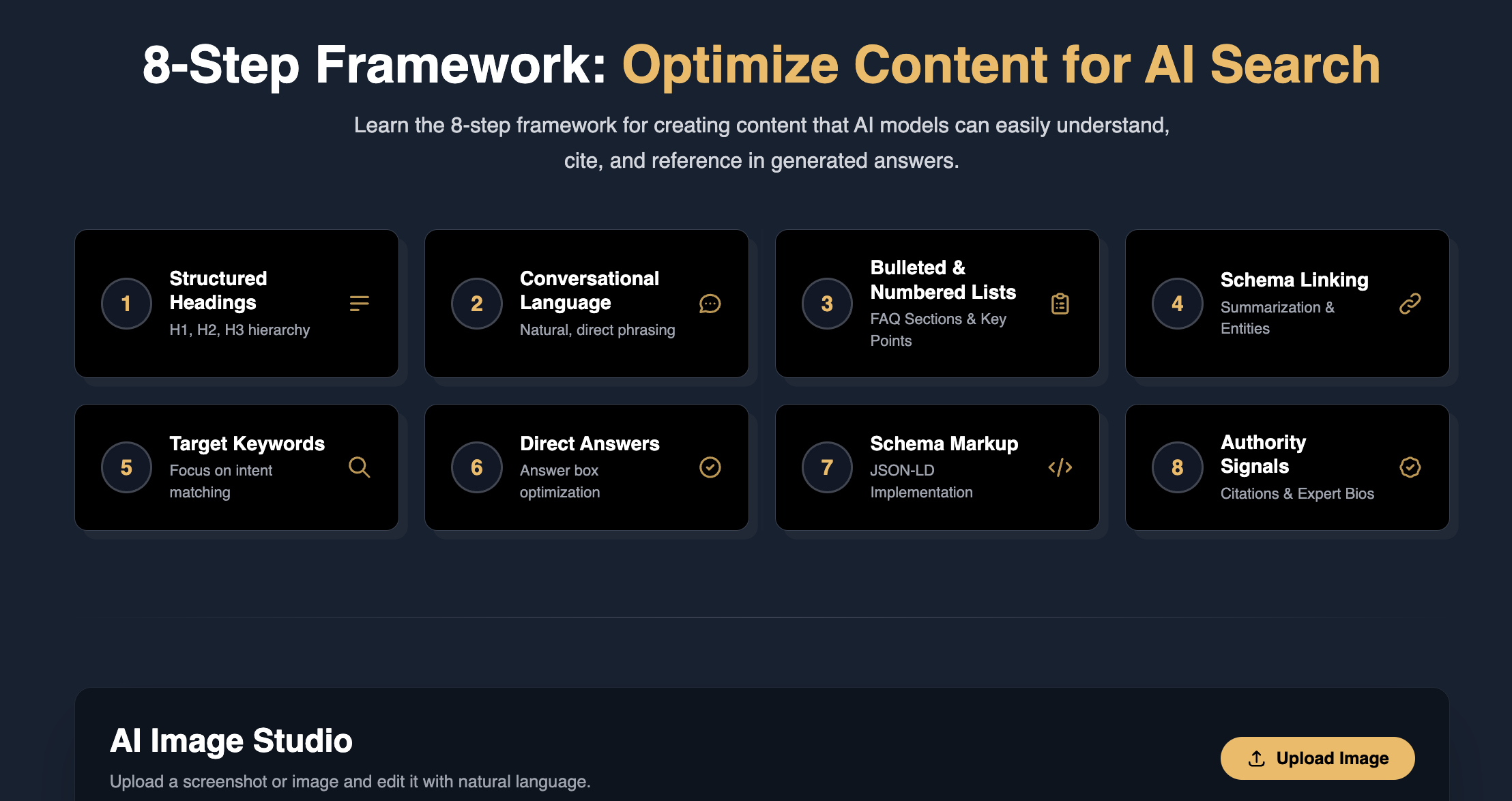
AI search engine optimization involves structuring your content with clear headings, direct answers, authoritative sources, and conversational language that AI models can easily understand and cite in their responses to user queries.
TL;DR - Quick Action Guide
- • Write clear, direct answers to specific questions
- • Use structured headings (H1, H2, H3) for better content hierarchy
- • Include authoritative data and recent statistics
- • Add schema markup for better AI understanding
- • Create FAQ sections answering common queries
- • Use conversational, natural language patterns
- • Include credible sources and citations
Why AI Search Optimization Differs from Traditional SEO
Traditional SEO
- • Focus on keyword rankings
- • Optimize for search result pages
- • Target click-through rates
- • Emphasize backlinks and authority
- • Keyword density optimization
AI Search Optimization
- • Focus on answer quality and citations
- • Optimize for AI model understanding
- • Target content comprehension
- • Emphasize structured data and clarity
- • Natural language optimization
8-Step AI Content Optimization Framework
1Start with Question-Based Headlines
Use headlines that mirror actual user questions. Instead of "SEO Best Practices," use "What are the most effective SEO strategies in 2024?"
Example:
❌ "Advanced SEO Techniques"
✅ "How do I improve my website's search rankings?"
2Lead with Direct Answers
Place the core answer in the first 1-2 sentences. AI models scan for immediate clarity before diving into details.
Template:
"[Answer] is [definition/solution]. This approach [benefit] by [explanation]."
3Structure with Clear Hierarchies
Use H1, H2, and H3 tags logically. AI models rely on heading structure to understand content relationships and extract relevant sections.
Proper Structure:
H1: Main Question
H2: Primary Concept
H3: Specific Detail
H2: Related Concept
H3: Implementation Step
4Include Authoritative Data
Add recent statistics, research findings, and credible sources. AI models prefer content they can verify and cite confidently.
Data Points to Include:
- • Recent studies and research (within 12 months)
- • Industry benchmarks and averages
- • Expert quotes and credentials
- • Case study results and metrics
5Add Schema Markup
Implement structured data to help AI understand your content context, authorship, and relationships between topics.
Essential Schema Types:
- • Article schema for blog posts
- • FAQ schema for question sections
- • Person schema for author credentials
- • Organization schema for company info
6Create Comprehensive FAQ Sections
Include a section answering related questions users might ask. This increases your chances of being cited for various query types.
FAQ Best Practices:
- • Use natural question phrasing
- • Keep answers concise (2-3 sentences)
- • Include variations of main keywords
- • Address common misconceptions
7Use Conversational Language
Write in a natural, conversational tone that matches how people speak to AI assistants. Avoid overly technical jargon unless necessary.
Language Tips:
- • Use second person ("you") when appropriate
- • Include transitional phrases
- • Define technical terms clearly
- • Match search query language patterns
8Monitor and Update Regularly
Track which content gets cited by AI platforms and update information to maintain accuracy and relevance.
Monitoring Strategy:
- • Check ChatGPT/Claude citations monthly
- • Update statistics and data points quarterly
- • Refresh content based on new developments
- • Track performance metrics and adjustments
Common AI optimization mistakes to avoid
❌ Don't Do
- • Keyword stuffing for AI models
- • Burying answers deep in content
- • Using overly complex language
- • Ignoring structured data
- • Creating content without clear purpose
✅ Always Do
- • Lead with clear, direct answers
- • Include recent, verifiable data
- • Structure content logically
- • Add proper schema markup
- • Update content regularly
Expert Insight
"The companies winning at AI search optimization focus on being genuinely helpful rather than gaming algorithms. AI models are getting better at identifying and preferring authentic, well-structured content that actually answers user questions."
- OmniGanic AI Optimization Team
Related Articles
AEO vs SEO: What's the Difference?
Learn the fundamental differences between traditional SEO and Answer Engine Optimization for AI platforms.
Complete Schema Markup Guide
Master structured data implementation to help AI platforms understand and cite your content effectively.
AI Visibility Optimization
Understand how to optimize your content for discovery and citation by AI platforms like ChatGPT and Claude.
SEO Automation Guide
Discover how automated tools can streamline your content optimization for both search engines and AI platforms.
Ready to Optimize Your Content for AI?
Get a comprehensive AI content audit and optimization strategy. We'll analyze your current content and provide a step-by-step plan to improve your AI search visibility.