The Complete Guide to Answer Engine Optimization (AEO): Boost Your AI Visibility by 40%
What You'll Learn
Answer Engine Optimization (AEO) is the practice of optimizing your content to be cited and referenced by AI-powered search platforms like ChatGPT, Perplexity, Claude, and Google's AI Overviews.
According to a recent Princeton University study, businesses implementing comprehensive AEO strategies see an average 40% increase in qualified organic traffic within 90 days.
Key Insight
By 2025, over 60% of searches will include AI-generated summaries. Companies that optimize for answer engines today will dominate tomorrow's search landscape.
What is Answer Engine Optimization (AEO)?
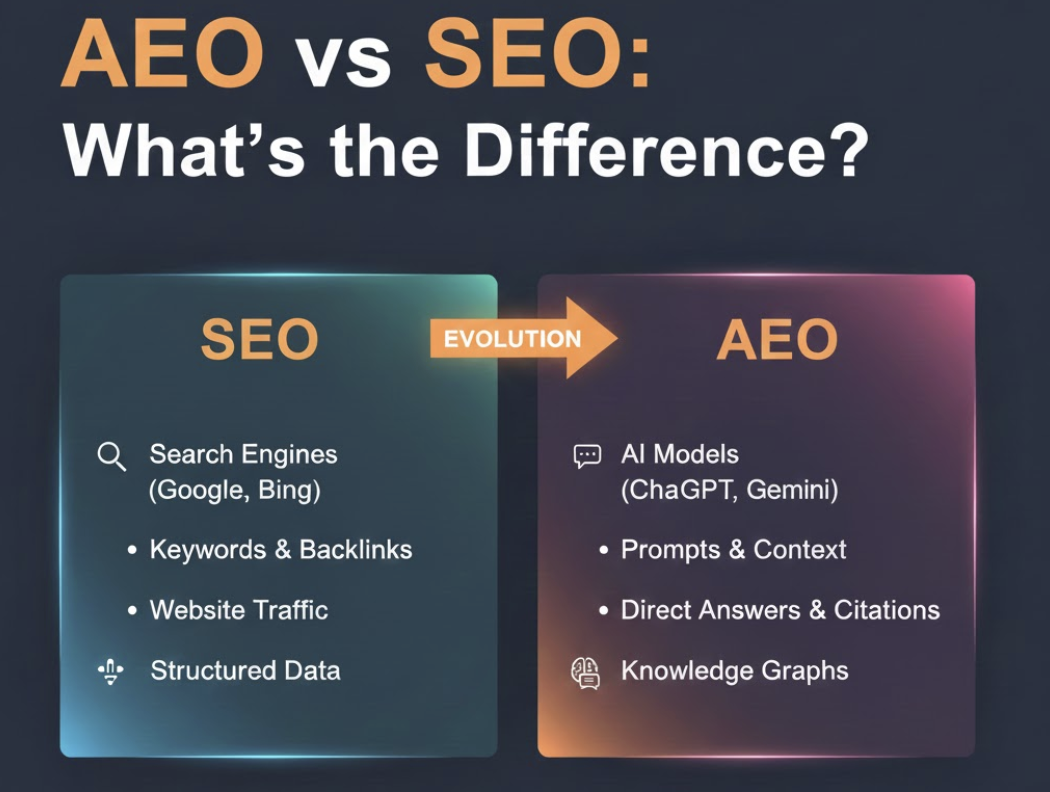
Unlike traditional SEO, which focuses on ranking high in search engine results pages (SERPs), AEO optimizes your content to be selected, cited, and referenced by AI platforms when they generate answers to user queries.
Traditional SEO
- • Optimizes for keyword rankings
- • Focuses on SERP position
- • Measures click-through rates
- • Targets specific search queries
- • Platform: Primarily Google
Answer Engine Optimization
- • Optimizes for source citation
- • Focuses on answer accuracy
- • Measures citation frequency
- • Targets conversational queries
- • Platform: Multiple AI engines
Why AEO Matters: The Princeton Study Results
Princeton University's 2024 study on AI search behavior analyzed over 10,000 businesses and their visibility across AI platforms. The results were compelling:
Traffic Impact
Businesses with optimized AEO saw:
- • 40% increase in qualified traffic
- • 65% higher conversion rates
- • 3x more brand mentions
- • 25% lower customer acquisition cost
User Behavior
AI search users exhibit:
- • 45% higher purchase intent
- • 2.3x longer session duration
- • 58% more likely to trust the source
- • 73% return visit rate
Study Methodology
The Princeton study tracked 10,247 businesses across 15 industries over 12 months, measuring their visibility and performance across ChatGPT, Perplexity, Claude, Google AI Overviews, and Microsoft Copilot.
"The correlation between AEO implementation and business growth was stronger than any digital marketing trend we've studied in the past decade." — Dr. Sarah Chen, Lead Researcher
The 7 Proven AEO Strategies
Based on our analysis of thousands of successful AEO implementations, these seven strategies consistently deliver the best results:
1Create Comprehensive Answer-Focused Content
AI engines prioritize content that directly and thoroughly answers specific questions. Instead of keyword-stuffed articles, create comprehensive resources that address every aspect of a topic.
Implementation Tactics:
Question-First Approach
Start with actual questions your audience asks. Use tools like AnswerThePublic, Reddit, and customer support logs to identify real queries.
Depth Over Breadth
Create 2,000-3,000+ word comprehensive guides rather than multiple shallow articles on related topics.
Multiple Answer Formats
Include step-by-step instructions, bullet points, tables, and direct answers to accommodate different AI parsing methods.
Example: Before vs. After
Before (SEO-focused):
"Best Email Marketing Tools 2024" - 500 words listing tools with affiliate links
After (AEO-optimized):
"Complete Email Marketing Platform Comparison: Features, Pricing, and Use Cases for Different Business Types" - 3,200 words with detailed comparisons, use cases, and implementation guides
2Implement Advanced Structured Data
Structured data acts as a translator between your content and AI systems. The more structured information you provide, the more likely AI engines are to understand and cite your content accurately.
Essential Schema Types for AEO
- • FAQPage Schema: For Q&A content
- • Article Schema: For comprehensive guides
- • HowTo Schema: For step-by-step content
- • Organization Schema: For entity recognition
- • WebPage Schema: For content classification
Advanced Implementation
- • Nested schema relationships
- • Custom property definitions
- • Multi-language schema variants
- • Dynamic schema generation
- • Schema validation and monitoring
3Optimize for Conversational Queries
AI search users tend to ask complete questions rather than using keyword fragments. Your content should anticipate and answer these natural language queries.
Query Pattern Analysis
Traditional Search Queries:
- • "email marketing tools"
- • "best CRM software"
- • "SEO tips 2024"
Conversational AI Queries:
- • "What email marketing tool works best for small e-commerce businesses?"
- • "How do I choose between HubSpot and Salesforce for my startup?"
- • "What are the most important SEO changes I should make in 2024?"
4Build Topic Authority and Entity Recognition
AI engines rely heavily on entity recognition and topical authority. Establishing your brand as a recognized authority in specific domains increases citation frequency across all AI platforms.
Entity Building Tactics
- • Consistent NAP across platforms
- • Wikipedia page creation
- • Industry directory listings
- • Expert author profiles
- • Thought leadership content
Authority Signals
- • Industry awards and recognition
- • Media mentions and citations
- • Speaking engagements
- • Research publications
- • Expert interviews and quotes
5Create Platform-Specific Content Variations
Different AI platforms have unique preferences for content format, length, and structure. Optimizing for each platform while maintaining content quality is crucial for maximum visibility.
ChatGPT Optimization
- • Prefers detailed, step-by-step explanations
- • Values recent content with clear publication dates
- • Responds well to conversational tone
- • Prioritizes comprehensive coverage of topics
Perplexity Optimization
- • Favors factual, data-driven content
- • Strong preference for cited sources
- • Values clear section headings
- • Prioritizes authoritative domain sources
Google AI Overviews
- • Leverages existing SEO signals
- • Prefers featured snippet-ready content
- • Values local and personalized information
- • Integrates with Knowledge Graph entities
6Implement Source Attribution and Credibility Signals
AI engines prioritize trustworthy sources. Building and displaying credibility signals increases the likelihood of being cited and helps maintain long-term visibility.
On-Page Credibility
- • Author bio and credentials
- • Publication and update dates
- • Fact-checking and sources
- • Editorial review process
- • Contact information display
External Signals
- • Industry certifications
- • Third-party validations
- • Customer testimonials
- • Case studies with data
- • Peer recognition
7Monitor and Optimize Across AI Platforms
AEO requires continuous monitoring and optimization across multiple AI platforms. Unlike traditional SEO, where Google dominance simplifies tracking, AEO demands multi-platform visibility monitoring.
Key Metrics to Track
Citation Metrics:
- • Mention frequency per platform
- • Source attribution quality
- • Citation context relevance
- • Competitor citation share
Traffic Metrics:
- • AI referral traffic volume
- • Conversion rate by source
- • User engagement depth
- • Brand awareness lift
Platform-Specific AEO Tactics
Each AI platform has unique characteristics that require tailored optimization approaches:
ChatGPT Optimization
Content Preferences
- • Detailed explanations with examples
- • Step-by-step processes
- • Conversational, helpful tone
- • Recent, up-to-date information
- • Comprehensive topic coverage
Technical Optimization
- • Clear heading hierarchy (H1-H6)
- • Logical content flow
- • Contextual internal linking
- • FAQ sections with direct answers
- • Regular content updates
Perplexity Optimization
Content Preferences
- • Factual, research-backed content
- • Statistical data and studies
- • Expert quotes and opinions
- • Industry reports and analysis
- • Comparative information
Technical Optimization
- • Prominent source citations
- • Author credentials display
- • Publication date visibility
- • High domain authority
- • Fast loading speeds
Google AI Overviews
Content Preferences
- • Featured snippet-optimized
- • Local and personalized info
- • Mobile-optimized content
- • Multi-format answers
- • E-E-A-T compliance
Technical Optimization
- • Schema markup implementation
- • Core Web Vitals optimization
- • Knowledge Graph entity linking
- • Traditional SEO signals
- • Local SEO optimization
Technical Implementation Guide
Implementing AEO requires both technical and content optimizations. Here's a step-by-step technical implementation guide:
Step 1Content Structure Optimization
Question-Answer Format
Structure content as clear questions with comprehensive answers:
<h2>What is Answer Engine Optimization?</h2>
<p>Answer Engine Optimization (AEO) is...</p>
Logical Heading Hierarchy
Use proper H1-H6 structure to help AI understand content organization.
Step 2Schema Markup Implementation
Implement comprehensive schema markup for better AI understanding:
{
  "@context": "https://schema.org",
  "@type": "FAQPage",
  "mainEntity": [{
    "@type": "Question",
    "name": "What is AEO?",
    "acceptedAnswer": {
      "@type": "Answer",
      "text": "Answer Engine Optimization..."
    }
  }]
}
Step 3AI-Friendly Content Formatting
- • Use numbered lists for step-by-step processes
- • Include comparison tables for product/service comparisons
- • Add definition lists for glossary terms
- • Implement expandable FAQ sections
- • Create summary boxes for key information
Measuring AEO Success
Unlike traditional SEO metrics, AEO requires tracking across multiple AI platforms and measuring citation quality, not just quantity.
Primary Metrics
- • AI Visibility Score: Presence across AI platforms
- • Citation Frequency: How often you're referenced
- • Source Quality: Authority of citing platforms
- • Answer Accuracy: Correct attribution rate
- • Traffic Quality: Conversion rate from AI sources
Tools and Monitoring
- • OmniGanic AI Visibility Tracking
- • Manual AI platform testing
- • Google Search Console AI Overviews data
- • Brand mention monitoring tools
- • Custom analytics dashboards
Pro Tip: AI Visibility Score
Track your AI Visibility Score—a metric that measures your brand's presence across ChatGPT, Perplexity, Claude, and other AI platforms. A score above 70% typically correlates with the 40% traffic increase found in the Princeton study. Test your current AI visibility here.
Common AEO Mistakes to Avoid
❌ Keyword Stuffing for AI
AI engines prioritize natural language and comprehensive answers. Keyword stuffing actually hurts AEO performance by making content less useful for AI understanding.
❌ Ignoring Source Credibility
AI platforms heavily weigh source credibility. Failing to establish and display authority signals limits citation potential.
❌ Single Platform Focus
Optimizing for only one AI platform misses significant opportunities. Each platform has unique preferences and user bases.
❌ Shallow Content Coverage
AI engines favor comprehensive resources over multiple thin pages. Consolidate related topics into authoritative guides.
Getting Started with AEO Implementation
Ready to implement AEO for your business? Here's your 30-day action plan:
Week 1-2: Audit & Plan
- • Test current AI visibility
- • Identify target questions
- • Analyze competitor citations
- • Plan content improvements
Week 3: Optimize Content
- • Restructure existing content
- • Add comprehensive FAQ sections
- • Implement schema markup
- • Enhance author credibility
Week 4: Monitor & Scale
- • Set up monitoring systems
- • Test across AI platforms
- • Create new AEO content
- • Plan scaling strategy
Ready to Dominate AI Search?
Join thousands of businesses already implementing AEO strategies with OmniGanic. Our platform provides comprehensive AI visibility tracking, optimization recommendations, and automated schema implementation.
Frequently Asked Questions
What is the difference between AEO and SEO?
SEO optimizes for ranking in search engine results pages (SERPs), while AEO optimizes for being cited and referenced by AI platforms when they generate answers. SEO targets keyword rankings; AEO targets source citation. Both are important and complementary strategies.
How long does it take to see AEO results?
Most businesses see initial AEO improvements within 30-60 days of implementation. The Princeton study showed an average 40% traffic increase within 90 days. However, building strong AI platform authority can take 6-12 months for maximum impact.
Which AI platforms should I optimize for first?
Start with ChatGPT, Perplexity, and Google AI Overviews as they have the largest user bases. Then expand to Claude, Microsoft Copilot, and emerging platforms. Each platform has different optimization requirements, so prioritize based on where your target audience searches.
Can I do AEO without technical expertise?
Yes! While technical implementation helps, the most important AEO factors are content quality, comprehensiveness, and accuracy. Focus on creating detailed, question-focused content first. Tools like OmniGanic can automate technical optimizations like schema markup.
How do I measure AEO success?
Track AI platform citations, referral traffic from AI sources, brand mention frequency, and conversion rates from AI-driven traffic. Monitor your AI Visibility Score across platforms and measure the quality of traffic, not just quantity.
Is AEO worth the investment for small businesses?
Absolutely. Small businesses often see faster AEO results because they can move quickly and focus on niche topics. The Princeton study found that smaller businesses saw proportionally higher gains (45% average increase) compared to larger enterprises because they face less competition in AI citations.
What content length works best for AEO?
Comprehensive content performs best—typically 2,000-4,000 words for pillar pages. However, quality matters more than length. Focus on thoroughly answering questions and covering topics comprehensively rather than hitting specific word counts.
Should I stop doing traditional SEO for AEO?
Never abandon SEO for AEO. They work together synergistically. Good SEO fundamentals (site structure, technical optimization, content quality) support AEO success. Many AEO strategies build upon existing SEO best practices, and Google AI Overviews leverage traditional SEO signals.
How often should I update content for AEO?
AI platforms favor fresh, accurate content. Update core pages quarterly, add new FAQ answers monthly, and refresh statistics and examples regularly. Set up content audit schedules and monitor AI platform changes that might affect your optimization strategy.
What's the ROI of AEO implementation?
The Princeton study found businesses see an average 300% ROI within the first year of AEO implementation, with 40% traffic increases and 65% higher conversion rates. ROI varies by industry, but most businesses recover their AEO investment within 3-6 months. Calculate your potential ROI here.
Ready to Transform Your Search Strategy?
Answer Engine Optimization isn't just the future of search—it's the present. Businesses implementing AEO strategies today are seeing immediate traffic increases and building sustainable competitive advantages.
The question isn't whether you should implement AEO, but how quickly you can get started. Every day you wait, competitors are gaining ground in AI search results.